LED Display for Retail Stores: A Complete Guide to Modern Retail Advertising
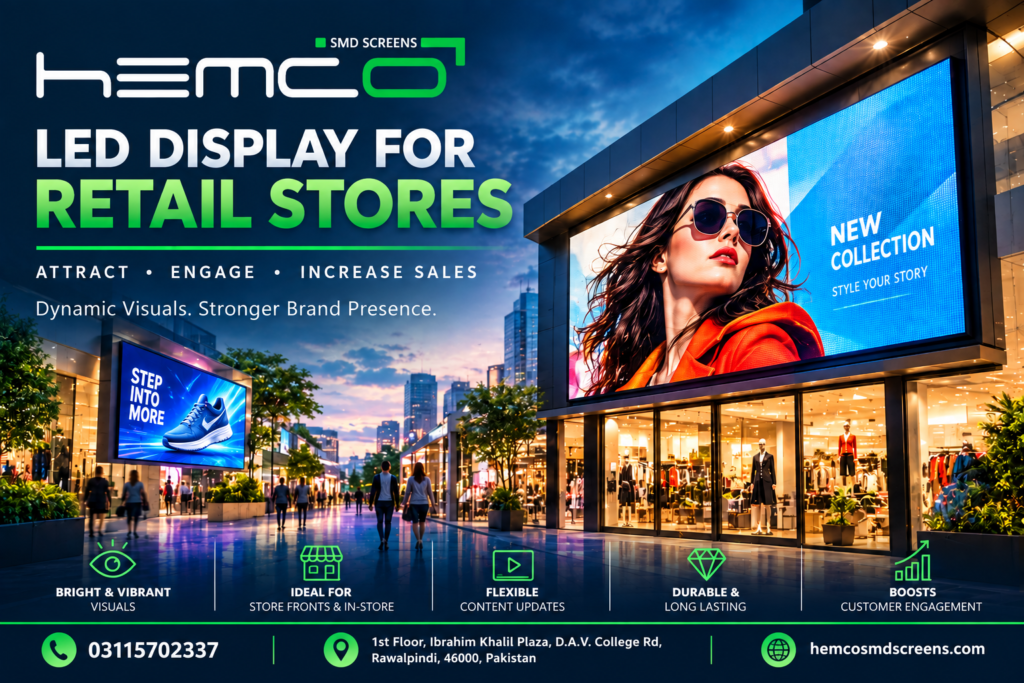
In today’s competitive retail environment, attracting customers requires more than simply having a well-designed storefront. Retailers need dynamic, engaging, and visually compelling ways to communicate with shoppers. This is where an LED display for retail stores can make a significant difference.
Unlike traditional printed signs, LED displays allow businesses to showcase promotions, product information, brand messages, videos, animations, and seasonal campaigns in bright, eye-catching visuals. For retailers looking to modernize their advertising and create a stronger storefront presence, HEMCO SMD SCREENS offer a practical digital display solution.
Whether installed inside a shopping mall, on a storefront, in a showroom, or at a point of sale, an LED display can help transform an ordinary retail environment into a more engaging customer experience.
What Is an LED Display for Retail Stores?
An LED display for retail stores is a digital screen made from light-emitting diodes (LEDs) that displays images, text, graphics, animations, and video content.
Retail LED screens can be installed in different locations depending on the purpose of the display. Common applications include:
- Storefront advertising
- Shopping mall displays
- Indoor promotional screens
- Product launch displays
- Digital signage
- Promotional campaigns
- Window displays
- Brand awareness screens
- Sales and discount announcements
- Corporate retail showrooms
The ability to change content digitally makes LED displays particularly useful for retailers that frequently update promotions and marketing messages.
Why Retail Stores Are Using LED Displays
Retail customers are surrounded by advertisements every day. Static posters and printed banners can communicate information, but digital displays provide retailers with an opportunity to make their messages more dynamic.
An LED screen can display moving graphics, high-resolution product visuals, promotional videos, and changing messages. Retailers can therefore use one screen for multiple campaigns instead of producing new printed materials every time a promotion changes.
For example, a clothing store can use the same LED display to promote a new collection in the morning, advertise a weekend sale later, and highlight a seasonal campaign afterward.
This flexibility makes an LED display for retail stores a valuable part of a modern visual marketing strategy.
1. Attract More Attention to Your Storefront
The storefront is often the first interaction a potential customer has with a retail business.
A bright and professionally installed LED display can make the storefront more noticeable, particularly in busy commercial areas and shopping environments.
Retailers can use the screen to display:
- New arrivals
- Special offers
- Limited-time discounts
- Product videos
- Seasonal promotions
- Brand campaigns
- Store announcements
Dynamic content can also be changed regularly, helping the storefront maintain a fresh appearance.
2. Showcase Products in a More Engaging Way
High-quality product photography is an important part of retail marketing. LED screens allow retailers to present products using vibrant images and videos.
For example, a fashion retailer could display models wearing its latest collection, while an electronics store could demonstrate the features of a new smartphone or television.
Restaurants and food retailers can also use digital screens to display menu items, promotional meals, and high-quality food imagery.
With HEMCO SMD SCREENS, businesses can create digital visual experiences that support different types of retail content.
3. Promote Sales and Special Offers
Retail promotions often change quickly.
Traditional signage may require printing, installation, removal, and replacement. Digital LED displays provide a more flexible alternative because promotional content can be updated electronically.
Retailers can use their screens to promote:
Flash Sales
Create urgency around short-term promotions.
Seasonal Discounts
Highlight campaigns for Eid, Independence Day, winter sales, summer sales, or other important shopping periods.
New Product Launches
Introduce customers to newly arrived products.
Clearance Sales
Communicate discounts on selected products.
Membership Promotions
Inform customers about loyalty programs and special offers.
This ability to update content helps businesses keep their advertising relevant.
4. Create a Modern Retail Environment
Customers increasingly encounter digital technology in shopping malls, airports, restaurants, banks, and other commercial environments.
Installing an LED display can contribute to a more contemporary appearance.
For premium retail brands, digital signage can also be integrated into the overall interior design. Large LED walls, creative display installations, and strategically positioned screens can become part of the visual identity of a store.
The result is not simply an advertising screen—it can become part of the customer’s overall shopping experience.
5. Use One Screen for Multiple Marketing Messages
One of the major advantages of digital signage is content flexibility.
Instead of dedicating a printed sign to one message, an LED display can show multiple pieces of content during a scheduled playlist.
For example:
Content 1: Brand advertisement
Content 2: New product announcement
Content 3: 20% promotional offer
Content 4: Product video
Content 5: Store information
These messages can rotate automatically according to the retailer’s marketing requirements.
Why Choose SMD LED Technology?
SMD stands for Surface-Mount Device, a technology commonly used in modern LED display modules.
SMD LED displays can provide detailed and vibrant visuals, making them suitable for applications where customers view the screen from relatively close distances.
For retail environments, choosing an appropriate pixel pitch is particularly important. The ideal pixel pitch depends on factors such as:
- Viewing distance
- Screen size
- Indoor or outdoor installation
- Type of content
- Required image detail
- Installation location
A screen intended for customers standing only a few meters away may require a different specification from a large outdoor storefront display viewed from across a street.
HEMCO SMD SCREENS for Retail Applications
HEMCO SMD SCREENS can be used for a variety of retail display requirements, allowing businesses to incorporate digital visual communication into their stores and commercial spaces.
Retail applications may include:
Storefront LED Displays
Storefront screens can be used to attract attention from pedestrians and passing traffic. Retailers can showcase promotional videos, product images, and important announcements.
Indoor LED Displays
Indoor screens can be positioned behind reception areas, near product sections, or in other high-visibility locations.
Shopping Mall Advertising
Retail brands operating inside shopping centers can use LED displays to communicate promotional campaigns and strengthen their visual presence.
Showroom Displays
Automotive, furniture, electronics, fashion, and other showrooms can use large-format LED screens to demonstrate products and create immersive presentations.
Promotional Displays
Temporary campaigns and special events can benefit from digital displays because content can be changed without replacing physical signage.
What Content Should Retailers Display?
Simply installing an LED screen is not enough. The content displayed on it plays an important role in capturing attention.
Retailers can consider using a combination of:
- Product photography
- Short promotional videos
- Animated graphics
- Brand messages
- Customer testimonials
- Discount announcements
- New product information
- Seasonal campaigns
- Social media content
- Store directions
- Event announcements
The content should be visually clear and easy to understand. Important information should generally be communicated quickly because customers may only look at the screen for a few seconds.
How LED Displays Can Support Retail Branding
Consistent branding is important for businesses that want customers to recognize them across different locations.
An LED display can incorporate brand elements such as:
- Logo
- Brand colors
- Typography
- Product imagery
- Promotional graphics
- Brand videos
- Campaign visuals
Retailers can create content that follows their existing brand guidelines, helping the LED screen become a natural extension of the overall store design.
Indoor vs. Outdoor LED Displays for Retail Stores
Before purchasing an LED display, retailers should determine whether the screen will be installed indoors or outdoors.
Indoor LED Displays
Indoor displays are commonly used in:
- Shopping malls
- Retail stores
- Showrooms
- Reception areas
- Product departments
- Entertainment spaces
Indoor screens are generally designed for controlled lighting and viewing conditions.
Outdoor LED Displays
Outdoor retail screens need to operate under changing environmental and lighting conditions.
Important considerations may include:
- Brightness
- Weather protection
- Viewing distance
- Installation structure
- Temperature conditions
- Maintenance requirements
- Visibility during daylight
For outdoor storefront advertising, selecting the appropriate display specifications is essential for reliable operation and clear visibility.
Choosing the Right Pixel Pitch
Pixel pitch is another important factor when selecting an LED display.
Pixel pitch refers to the distance between the centers of adjacent LED pixels. Generally, a smaller pixel pitch allows for greater image detail when the screen is viewed from a close distance.
Retailers should consider where customers will stand when selecting the display.
For example:
Close viewing distance: A finer pixel pitch may be appropriate.
Medium viewing distance: A medium pixel pitch may provide a suitable balance between detail and cost.
Long viewing distance: A larger pixel pitch may be sufficient for large outdoor displays.
A professional LED display supplier can help determine the appropriate specification based on the installation environment.
LED Displays vs. Traditional Retail Signage
Traditional signage continues to have applications in retail, but LED displays offer several additional capabilities.
| Feature | Traditional Signage | LED Display |
|---|---|---|
| Static information | Yes | Yes |
| Video content | No | Yes |
| Animations | Limited | Yes |
| Content updates | Requires replacement | Digital update |
| Multiple campaigns | Requires multiple signs | Multiple messages on one screen |
| Dynamic advertising | Limited | Yes |
| Product demonstrations | No | Yes |
| Seasonal content changes | Requires new material | Easy to update |
The appropriate solution depends on the retailer’s goals, budget, environment, and content requirements.
How to Plan an LED Display Installation
Before installing an LED display for a retail store, businesses should evaluate several factors.
1. Determine the Purpose
Decide whether the display will primarily be used for advertising, branding, product information, entertainment, or a combination of these purposes.
2. Select the Installation Location
Consider whether the screen will be positioned:
- Outside the storefront
- Inside a window
- Behind a reception desk
- On an interior wall
- Above product displays
- In a showroom
3. Calculate Viewing Distance
The typical customer viewing distance should influence the pixel pitch and screen specifications.
4. Consider Screen Size
The screen should be large enough to attract attention without overwhelming the retail environment.
5. Plan the Content
Prepare a content strategy before installation. Consider what information will be displayed and how frequently it will change.
6. Consider Maintenance
Like any electronic equipment, LED displays require appropriate maintenance and care. Retailers should consider access for servicing and component replacement when planning the installation.
Making the Most of Your Retail LED Screen
To maximize the value of an LED display, retailers should avoid treating it simply as a digital version of a printed poster.
Instead, use the capabilities of digital signage.
For example, create short videos rather than displaying only static images. Use animations to introduce products. Rotate different promotional campaigns. Highlight limited-time offers and update content regularly.
A well-planned content strategy can make the display more useful throughout the year.
Applications Across Different Retail Industries
An LED display for retail stores can be adapted to many industries.
Fashion Stores
Show new collections, seasonal campaigns, fashion videos, and promotional offers.
Electronics Stores
Demonstrate products, highlight specifications, and promote new technology.
Supermarkets
Advertise special offers, discounts, and featured products.
Jewelry Stores
Display high-quality product imagery and brand campaigns.
Furniture Stores
Show room designs, product demonstrations, and lifestyle imagery.
Automotive Showrooms
Present vehicle launches, specifications, promotional campaigns, and brand videos.
Restaurants and Cafés
Display menus, special offers, food photography, and promotional videos.
The Future of Retail Advertising Is Digital
Retail is becoming increasingly visual and digital. Businesses are looking for ways to communicate information quickly while creating memorable experiences for customers.
LED displays provide retailers with a flexible platform for visual communication. Instead of relying entirely on printed advertisements, businesses can create content that changes according to campaigns, seasons, products, and customer needs.
For retailers planning to upgrade their visual communication, HEMCO SMD SCREENS can be considered for storefronts, shopping environments, showrooms, and other commercial applications.
Conclusion
An LED display for retail stores can serve many purposes—from attracting attention outside a storefront to communicating promotions and creating engaging experiences inside the store.
With dynamic content, vibrant visuals, flexible messaging, and the ability to support video and animation, LED technology provides retailers with more possibilities than conventional static signage.
The right display depends on the installation environment, viewing distance, screen size, brightness requirements, content strategy, and business objectives. By carefully considering these factors, retailers can develop an effective digital signage solution with HEMCO SMD SCREENS.